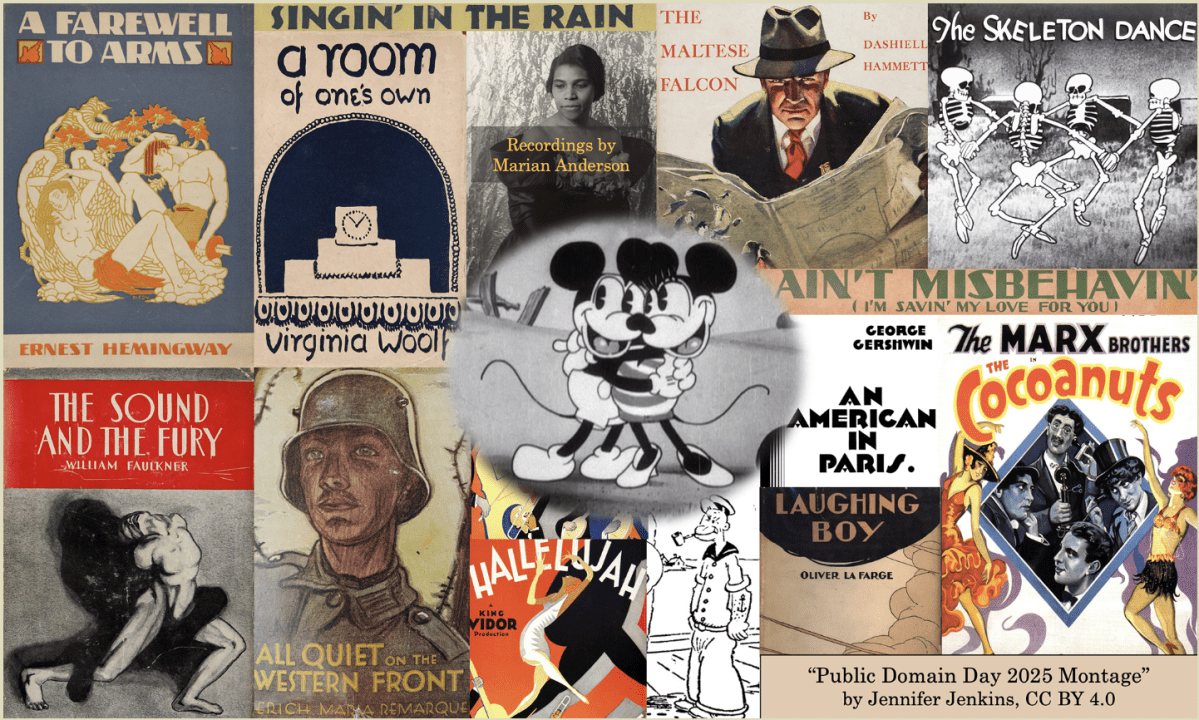
It’s a newish year, which means we’ve got a newish batch of old material available for use without exorbitant fees.
Copyright laws can get pretty convoluted, but as a general rule, expiration depends on the death of the author (no, not that one). In many countries, a work enters the public domain either 50 or 70 full calendar years after its maker’s passing; as of 2025, this means copyright has lapsed for the intellectual properties of several creators who died in 1954 or 1974. While the U.S. Copyright Term Extension Act stretched out renewals for works that were still under copyright as of 1998, even some of those IPs are now up for grabs.
The batshit post-pandemic media landscape has produced a surge of cheap, rushed, and poorly-reviewed horror movies based on freshly public domain characters. 2023’s Winnie-the-Pooh: Blood and Honey takes advantage of the earliest incarnations of A.A. Milne’s Pooh and Piglet, though writer/director Rhys Frake-Waterfield had to wait until the sequel to use Tigger. Meanwhile, the Steamboat Willie version of Mickey Mouse has already spawned at least two slashers: The Mouse Trap and Screamboat.
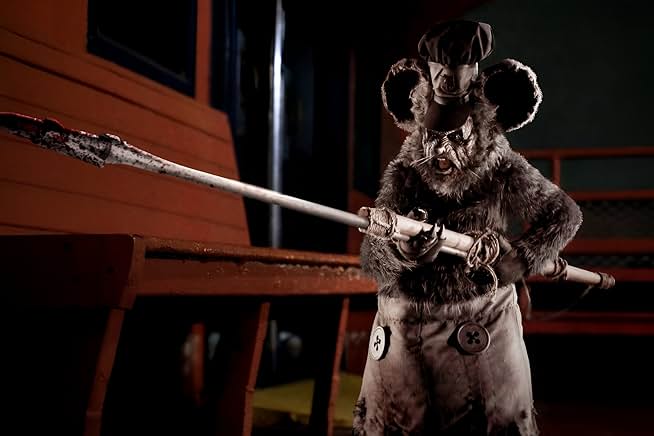
These movies thrive on the shock value of turning beloved family-friendly characters into bloodthirsty monsters. But as long as people keep watching and talking about them, even solely to complain, opportunists will continue to make them.
While I don’t particularly care for the trend, it doesn’t bother me on a personal level; I have similar feelings toward things like Disney’s “live-action” remakes, or the Kardashians/Jenners. That said, I can’t help wondering if people seeking to cash in on the public domain are overlooking some high-potential material.
Just for fun, I’ve decided to brainstorm possible adaptations for a handful of media whose copyrights recently expired. On the off-chance that any reader actually turns at least one of these elevator pitches into a real movie, I ask that you hire a union cast and crew, put my name in the credits (preferably spelled correctly), and give me 1% of streaming revenue if applicable.
Is Sex Necessary? Or, Why You Feel the Way You Do by James Thurber and E.B. White
Yes, the guy who eventually brought us the classic children’s books Charlotte’s Web, Stuart Little, and The Trumpet of the Swan once teamed up with his fellow New Yorker staff member to write a sex guide. It’s quaint, tongue-in-cheek, and aggressively hetero, but it does seemingly criticize male fragility and the paradoxical idolization and othering of women.
I’ll admit to doing a double take when I read the sentence, “They did not worry each other with emotional didoes.” I definitely thought that last word was…something else, and wondered if I’d underestimated the book’s raunchiness. (Apparently, “dido” is an informal term for a mischievous trick, prank, or antic.)
Other non-narrative handbooks have produced successful, if very loose, movie adaptations. Mean Girls is based on Rosalind Wiseman’s Queen Bees and Wannabes, a guide for parents to help their daughters navigate the difficult social landscape of teenhood. There’s even precedent specifically for the erotic advice subgenre, with Everything You Always Wanted to Know About Sex* (*But Were Afraid to Ask), a straightforward manual turned into a comedic anthology film.
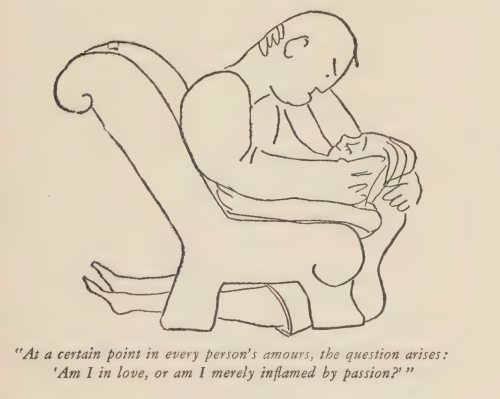
Is Sex Necessary? would work best as a period flick set in New York circa 1929 (the year of the book’s publication), or slightly earlier to avoid a downer ending with the stock market crash. It could follow an ensemble of singles and couples in different life stages, whose paths end up colliding in unexpected ways. Ideally, the movie would feature a diverse cast without crossing into tokenism or rewriting U.S. history to be politically correct. I’d also expect it to be more risqué than the source material, though not too dirty by a modern audience’s standards. For extra flair, the director could incorporate some of Thurber’s minimalist illustrations as Easter eggs.
Turing’s Proof, aka “On Computable Numbers, with an Application to the Entscheidungsproblem”
Under UK copyright law, this work by mathematician and World War II codebreaker Alan Turing is now in the public domain—not that anyone’s in a hurry to lump it in with the likes of Mickey Mouse and Winnie-the-Pooh.
How does one even adapt a mathematical proof? Going by the recent public domain schlock wave, the easiest approach would be personifying it as a low-budget masked killer who dispatches nerds in grotesque ways.
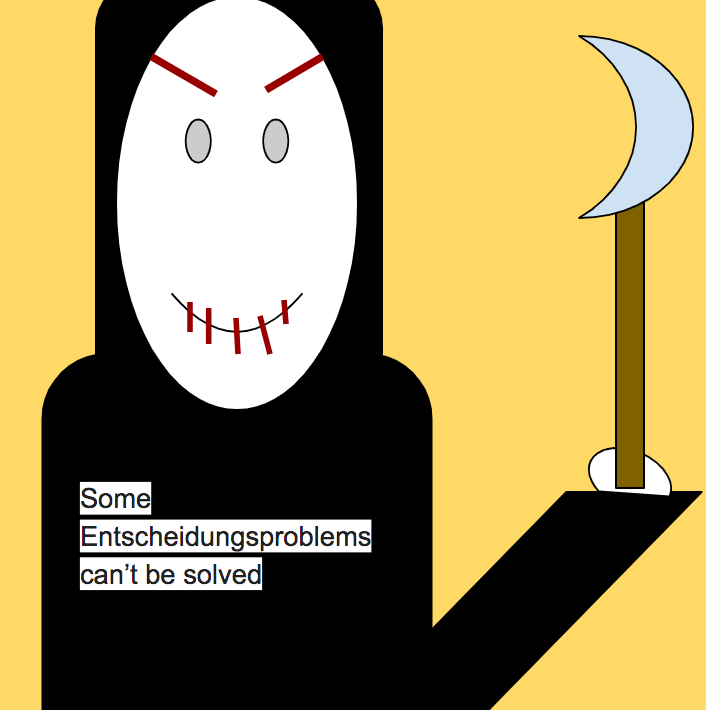
If a director wanted to avoid making a generic slasher, they could give the proof a less humanoid but still tangible form—perhaps a light or a gust of wind—and pay homage to the Ark of the Covenant by inducing face-melting and head-popping in those who pursue knowledge with too much hubris. Or they could stick the proof in a love triangle with the Pythagorean Theorem (obviously) and the Quadratic Formula; the movie doesn’t have to be horror. (Cue everyone who struggled with post-algebra math in school, including me: “Yes, it does.”)
Frida Kahlo’s Paintings
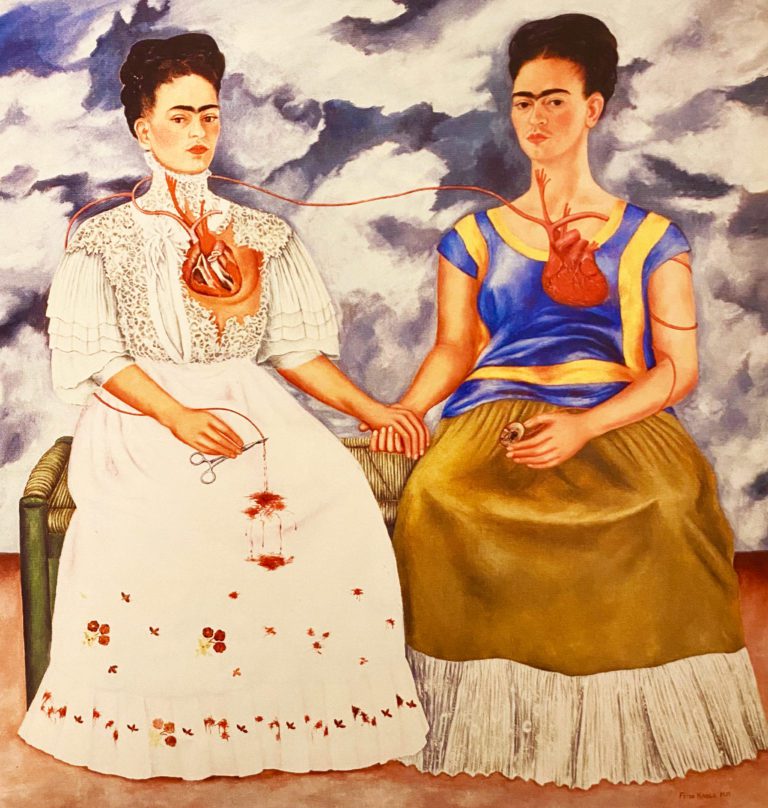
The biconic artist died in 1954, leaving behind a vast portfolio spanning 30 years of her too-short life. Like Kahlo herself, these paintings defy the confines of a single category; they can be beautiful, absurd, heartbreaking, amusing, freaky, or all of the above.
I see The Two Fridas as a tale of conjoined sisters who share major blood vessels, but have separate hearts—one healthy, the other damaged and in need of replacement. The twins embrace different sides of their mixed heritage and are determined to lead individual lives, but they can’t be safely surgically detached unless the ill sister finds a suitable donor heart.
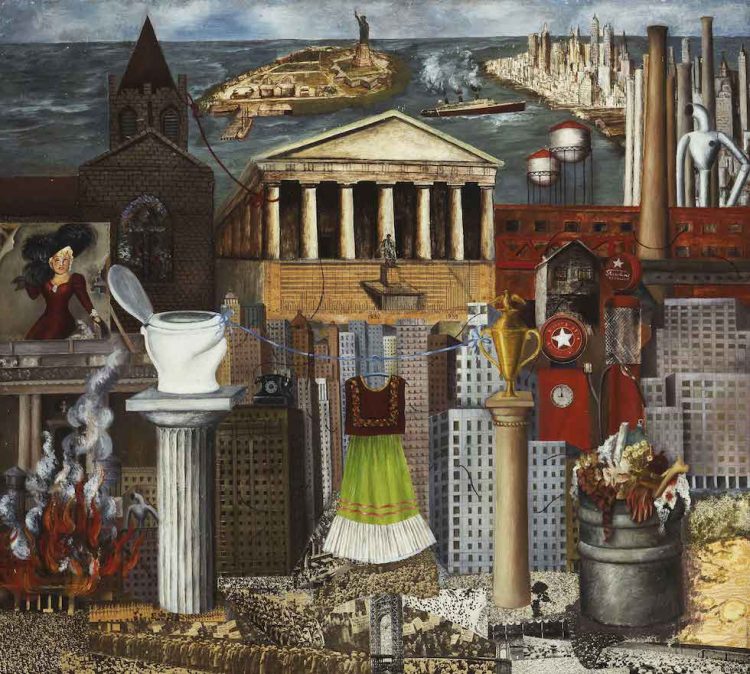
My Dress Hangs There sets the perfect backdrop for a fish-out-of-water story, since it’s based on Kahlo’s homesickness for Mexico while she and Diego Rivera were in New York City. Humans are seemingly absent from the painting, apart from monuments and a Mae West poster, creating a vaguely post-apocalyptic feel. This makes me think of the titular dress as a sentient protagonist dealing with culture clash against all the New York objects she encounters.
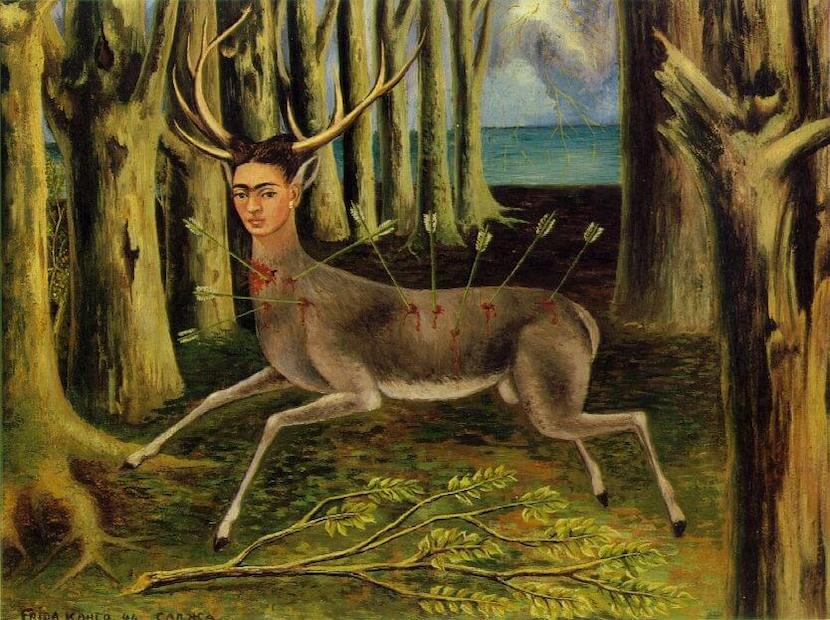
Hell, if someone just wanted to help build a public domain slasher cinematic universe, they could always turn The Wounded Deer into a crossover with Bambi: The Reckoning.
These Songs (Music and Lyrics)
According to Duke Law School’s Center for the Study of the Public Domain, musical compositions and actual sound recordings fall under distinct copyright terms. This means anyone can currently use George Gershwin’s An American in Paris or Maurice Ravel’s Boléro in their movie, but they’ll have to shell out money for either an existing recording or a live orchestra. When handled by sufficiently talented people, though, 2025’s public domain compositions still open up a world of possibilities.
Jukebox musicals are often hit-or-miss, especially when popular songs get hokey arrangements, but if someone can successfully combine cover versions of Singin’ in the Rain, Ain’t Misbehavin’, and Tiptoe Through the Tulips into something cohesive—perhaps a story of a lovestruck jazz musician stranded outside during a storm in the Netherlands—they deserve recognition. Now might also be a good time to give Duke Ellington the biopic treatment.
These Songs (Original Recordings)
Gershwin’s rendition of Rhapsody in Blue has officially entered the public domain, as have Marian Anderson’s My Way’s Cloudy and Marion Harris and the Isham Jones Orchestra’s It Had to Be You. So if you just want your movie to have a kickass soundtrack without worrying about paying for the rights or producing new variations on the music, this is the way.


Great idea! I’d love to see Frida Kahlo’s works reimagined.
LikeLiked by 1 person