Heritage Month Double Feature

Every single sliver of the Gregorian calendar, it seems, has some sort of theme. I’ll open a social media app, and 17 accounts I don’t even follow will clog my homepage with posts about, like, National Pizza Day, or International Sock Day, or Milky Way Galaxy Pizza Sock Day.

While I mostly ignore novelty holidays, I appreciate the month-long observances that honor the contributions of the many cultures comprising the modern United States. Even if acknowledgments in the media are largely performative, I usually end up learning something new.

Continue reading “Heritage Month Double Feature”

The TV Episode That Got a Misunderstood Holiday Right

Enjoying older media often entails accepting outdated terminology, politically incorrect humor, and plain wrong notions about our fellow humans. But every once in a while, a surprisingly inoffensive hidden gem will surface from the vault of our complex history.

The Alfred Hitchcock Hour was a continuation of the anthology series Alfred Hitchcock Presents that doubled the episode length (for better or worse). Like its more famous yet shorter-lived contemporary, The Twilight Zone, the show ranged from the speculative and supernatural to the more grounded. And, as with The Twilight Zone, it has since spent decades in syndication on cable channels, usually at late hours.

One Hitchcock episode examines the consequences of overcrowding in certain Mexican cemeteries—namely, if families of the deceased couldn’t keep up with burial plot rental payments, their loved ones would be exhumed to make room for other bodies. This was an actual thing that happened, and author Ray Bradbury’s horror at the situation inspired at least two stories: 1947’s “The Next in Line,” about an American couple stranded near the catacombs of Guanajuato, and 1963’s “The Life Work of Juan Diaz,” which Bradbury himself adapted into a teleplay in 1964.

Continue reading “The TV Episode That Got a Misunderstood Holiday Right”
Top 10 Best Uses of Diegetic Music in Modern Horror

The horror genre is a fertile ground for diegetic scores—tunes actually playing in-universe—which frequently serve to build dramatic tension, but can evoke a wide variety of emotions. These songs include bona fide classics, novelties, annoyingly catchy guilty pleasures, and straight-up auditory hell. All of the following examples manage to enhance the works featuring them.

I’ve done my best to include clips of scenes when possible, but studios can be extremely stingy with copyrighted music, and a few examples only seem to exist online in crappy edits. If an entry is missing a video of a moment you really want to see, I highly encourage you to check out the movie or show for yourself.

By no means have I seen all horror media from this millennium. If you can think of any glaring omissions, feel free to leave them in the comments!

Continue reading “Top 10 Best Uses of Diegetic Music in Modern Horror”

The Prime Time Rhyme Paradigm

Advertising is one of those fields I considered using as a stepping stone toward my dream job as head writer and Weekend Update anchor at Saturday Night Live. Agency positions are hard to get without the right connections, though, and I suppose managers are less than eager to hire someone who would expressly rather be somewhere else. Nevertheless, I know I could write better ad copy than much of what’s been on TV over the last decade or so.

As an adult boomerang kid of Boomer parents who still have cable, I probably see more commercials on a daily basis than most people in the tail-end Millennial/elderly Gen Z bubble. My tolerance for repetition is quite high—one joy of being on the spectrum—so an ad has to be pretty damn irritating for me to dislike it. The ones that irk me the most tend to contain egregious grammatical errors, bad acting that’s not bad enough to be funny, and extremely clunky rhymes. For some reason, there’s been a recent uptick in the last of these.

Continue reading “The Prime Time Rhyme Paradigm”

Siberia: A Genre-Breaking Show That Never Really Ended

Scripted network television is no stranger to abrupt cancellation. When a show gets the ax unexpectedly, it may result in two flavors of bad series finale: the pointless cliffhanger and the tacked-on post-production resolution (in which it’s painfully obvious the showrunners couldn’t get the main actors to film new scenes, so the ending consists of awkward expository narration and the occasional Fake Shemp). The last episode of Castle somehow managed to do both at once. 

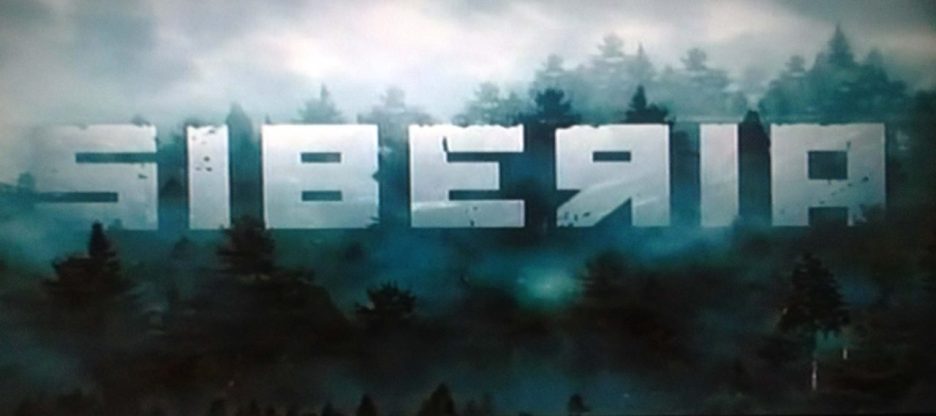
But what happens when a major network lacks the authority to cancel or renew an independently financed series? In the case of Siberia, it means existing in developmental limbo for 11 years and counting. 

Continue readingSiberia: A Genre-Breaking Show That Never Really Ended”