How Well Do Festival Films Hold Up?

I have a bit of a love/hate relationship with South by Southwest, the multimedia festival that just ended its 2025 run. On the one hand, it showcases various musicians, filmmakers, educators, and innovators who may not get exposure elsewhere. On the other hand, it’s now so damned expensive that only people with thousands of dollars to spare can experience the full scope of the event. (“Free” badges are available to volunteers who work a certain number of hours, but that’s a whole other can of worms.) 

10 years ago, when you could still snag a film festival wristband for $90, I was lucky enough to binge several movies with my mom and my longtime friend Victoria. Rather than spend an entire post kvetching about SXSW’s badge system, I thought I’d take a look back at what I saw in 2015, how much of it stuck with me, and how much of it is still relevant in the popular consciousness.

At the time, I didn’t think to take notes, so I’m going off my memory—which fluctuates between extremely spotty and borderline eidetic, depending on what I’m trying to recall. (I remember things like random-ass trivia and all my kindergarten classmates’ first names in alphabetical order, but I sometimes have to dig cooking instructions out of the trash because I’ve already forgotten whether to preheat the oven to 400 or 425° F.) Anyway, these are the movies I saw at SXSW 2015, and my impressions of them after a tumultuous decade.


Continue reading “How Well Do Festival Films Hold Up?”
Less Obvious Public Domain Stuff to Adapt in 2025

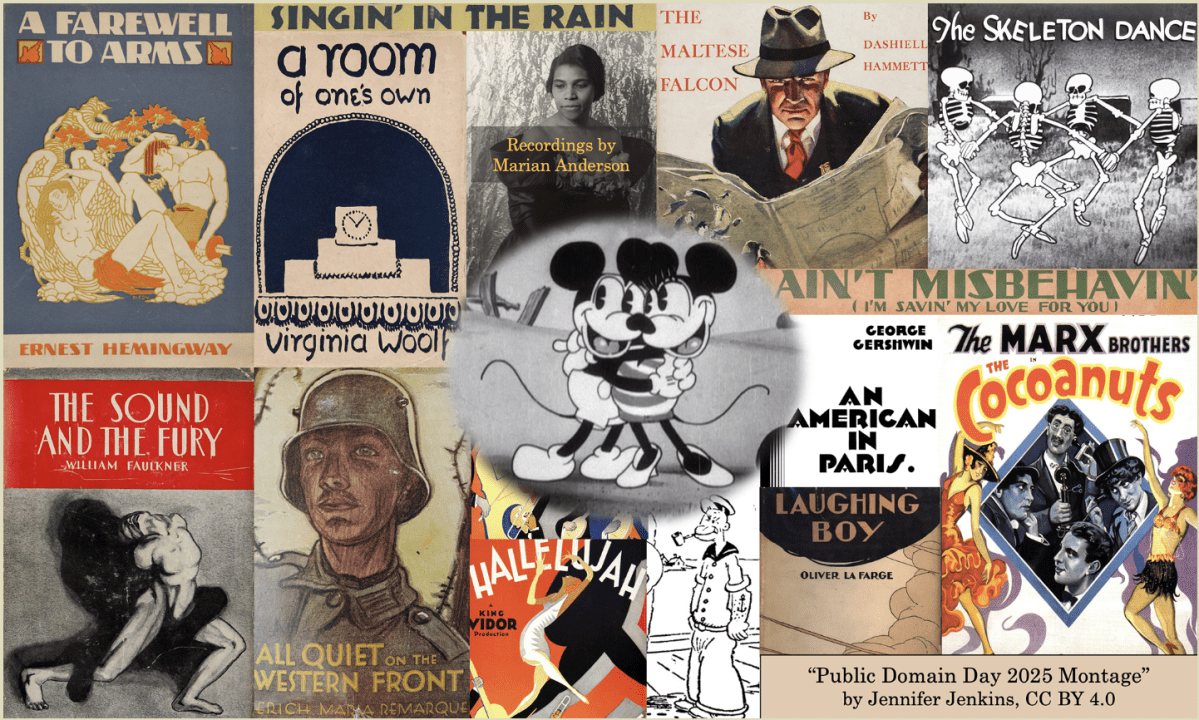
It’s a newish year, which means we’ve got a newish batch of old material available for use without exorbitant fees.

Copyright laws can get pretty convoluted, but as a general rule, expiration depends on the death of the author (no, not that one). In many countries, a work enters the public domain either 50 or 70 full calendar years after its maker’s passing; as of 2025, this means copyright has lapsed for the intellectual properties of several creators who died in 1954 or 1974. While the U.S. Copyright Term Extension Act stretched out renewals for works that were still under copyright as of 1998, even some of those IPs are now up for grabs.

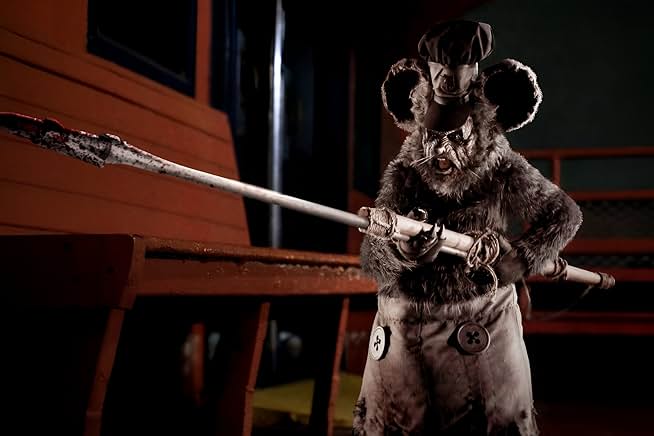
The batshit post-pandemic media landscape has produced a surge of cheap, rushed, and poorly-reviewed horror movies based on freshly public domain characters. 2023’s Winnie-the-Pooh: Blood and Honey takes advantage of the earliest incarnations of A.A. Milne’s Pooh and Piglet, though writer/director Rhys Frake-Waterfield had to wait until the sequel to use Tigger. Meanwhile, the Steamboat Willie version of Mickey Mouse has already spawned at least two slashers: The Mouse Trap and Screamboat.

David Howard Thornton as the killer in “Screamboat.” It’s a cleverer title than “The Mouse Trap,” but this evil Mickey looks too much like an extra in the stage version of “Cats.”

These movies thrive on the shock value of turning beloved family-friendly characters into bloodthirsty monsters. But as long as people keep watching and talking about them, even solely to complain, opportunists will continue to make them. 

While I don’t particularly care for the trend, it doesn’t bother me on a personal level; I have similar feelings toward things like Disney’s “live-action” remakes, or the Kardashians/Jenners. That said, I can’t help wondering if people seeking to cash in on the public domain are overlooking some high-potential material.

Just for fun, I’ve decided to brainstorm possible adaptations for a handful of media whose copyrights recently expired. On the off-chance that any reader actually turns at least one of these elevator pitches into a real movie, I ask that you hire a union cast and crew, put my name in the credits (preferably spelled correctly), and give me 1% of streaming revenue if applicable.

Continue reading “Less Obvious Public Domain Stuff to Adapt in 2025”

The Curly Shuffle: A Stooge’s Unexpected Influence on Modern Dance

Harry, Hermione, and Ron. Kirk, Spock, and McCoy. Alvin, Simon, and Theodore. Few trios are as iconic as Moe, Larry, and Curly—and even fewer have a third member so beloved it’s easy to forget they weren’t part of the original line-up. 

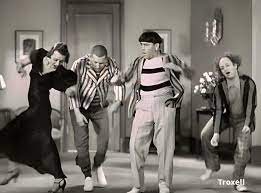
Jerome Lester Horwitz, better known as Curly Howard, joined the Three Stooges in 1932 as a favor to his brother Moses (Moe), replacing his other brother Samuel (Shemp). Little did any of them know just how rapidly Curly would eclipse Shemp in the popular consciousness. His impressive athleticism, combined with his goofy vocalizations, elevated much of the act’s oeuvre from mere silliness to comedic gold. And, as some modern viewers have noticed, at least one of Curly’s signature moves may have contributed to the evolution of dance as a whole.

Continue reading “The Curly Shuffle: A Stooge’s Unexpected Influence on Modern Dance”