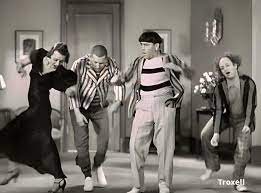
The Curly Shuffle: A Stooge’s Unexpected Influence on Modern Dance

Harry, Hermione, and Ron. Kirk, Spock, and McCoy. Alvin, Simon, and Theodore. Few trios are as iconic as Moe, Larry, and Curly—and even fewer have a third member so beloved it’s easy to forget they weren’t part of the original line-up. 

Jerome Lester Horwitz, better known as Curly Howard, joined the Three Stooges in 1932 as a favor to his brother Moses (Moe), replacing his other brother Samuel (Shemp). Little did any of them know just how rapidly Curly would eclipse Shemp in the popular consciousness. His impressive athleticism, combined with his goofy vocalizations, elevated much of the act’s oeuvre from mere silliness to comedic gold. And, as some modern viewers have noticed, at least one of Curly’s signature moves may have contributed to the evolution of dance as a whole.

Continue reading “The Curly Shuffle: A Stooge’s Unexpected Influence on Modern Dance”
Death of the Living Author

Look, sometimes I need to reassure myself that majoring in English wasn’t a total waste.

“Death of the Author” is the literary criticism theory that writers ultimately lose control of their work, and a reader’s interpretation is valid no matter how far it deviates from the author’s intentions. Apart from helping generations of students bullshit their way through book reports, this school of thought opens the floodgates for fans to share their wildest hypotheses and desired shippings, often in the form of fanfiction.

Your favorite characters didn’t get together? No worries—you can just expand the story so they fall in love and live happily ever after, even if it means making their canonical partners cartoonishly evil. It’s not like their creator can stop you, especially if said creator is deceased in both a literal and figurative sense. 

Of course, many authors’ corporeal forms continue to operate, and they frequently make their own statements on what is, isn’t, and can be canon. Certain online platforms have given fandoms unprecedented access to these writers, and their ensuing dialogues can have universe-altering implications. Consequently, I believe the social media age has ushered in a new lit crit variant: Death of the Living Author. 

Continue reading “Death of the Living Author”

Good Live-Action Cat Movies Do Exist

In his 2017 video review of Nine Lives (which is no longer on his YouTube channel but still exists on Dailymotion), Ralph Sepe Jr., otherwise known as ralphthemoviemaker, poses a challenge to his audience. “Name a good cat movie. You can’t do it, right?” He goes on to claim cats are too boring to carry movies the way dogs do.

Despite Sepe’s wide range of cinematic knowledge, his remarks reveal a feline-shaped gap in his film education. Live cats—not CGI abominations—have played central roles in a number of acclaimed movies, some of which may even qualify as classics.

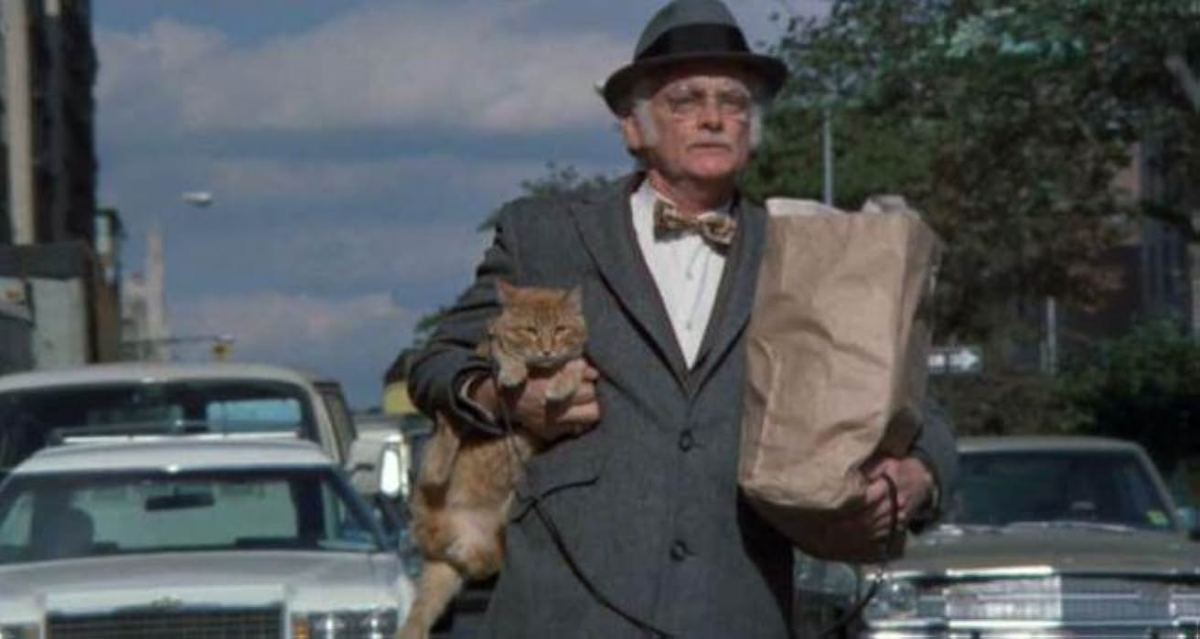
Perhaps the best example is Harry and Tonto, a dramedy about a displaced old man who goes on a cross-country journey with his beloved cat. Starring Art Carney as Harry and a couple of orange tabbies as Tonto, the film is every bit as funny and poignant as the best dog flicks. At the Tokyo premiere, the audience reportedly cried so hard during the title characters’ final scene together that they drowned out the remainder of the film’s dialogue. Director Paul Mazursky attributed this to Japan’s great love of cats.

Continue reading “Good Live-Action Cat Movies Do Exist”

Siberia: A Genre-Breaking Show That Never Really Ended

Scripted network television is no stranger to abrupt cancellation. When a show gets the ax unexpectedly, it may result in two flavors of bad series finale: the pointless cliffhanger and the tacked-on post-production resolution (in which it’s painfully obvious the showrunners couldn’t get the main actors to film new scenes, so the ending consists of awkward expository narration and the occasional Fake Shemp). The last episode of Castle somehow managed to do both at once. 

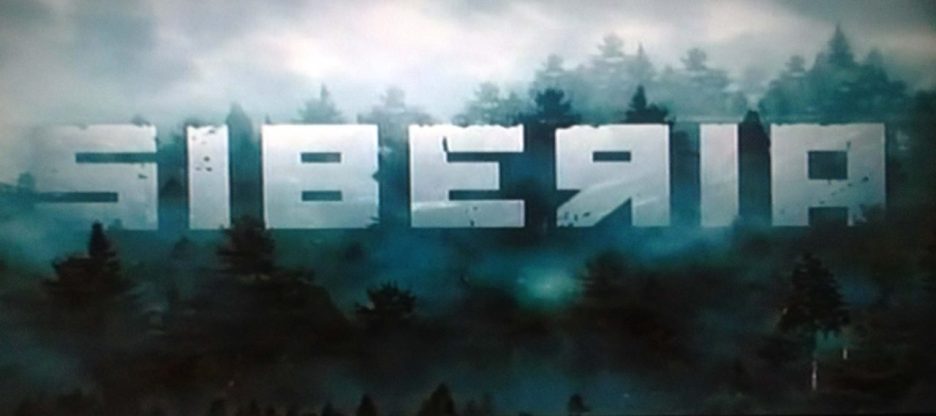
But what happens when a major network lacks the authority to cancel or renew an independently financed series? In the case of Siberia, it means existing in developmental limbo for 11 years and counting. 

Continue readingSiberia: A Genre-Breaking Show That Never Really Ended”

Why I Started Writing Jewxicans

They say—whoever “they” are—to write what you know. This poses a challenge in genre fiction, since most of us don’t have personal experience time-traveling, riding dragons, or navigating a romance with a 3,000-year age gap. Still, creators of all stripes incorporate aspects of their lives into their stories.

As a half-Jewish, half-Mexican woman, I encounter the world in a particular way. It’s not always a smooth ride, but my mixed background is instrumental to my cultural awareness, open-mindedness, and sense of humor. During my childhood, though, I was a lot less conscious of my identity, and I tended to default to implicitly WASPish characters in my works of fiction.

Continue reading “Why I Started Writing Jewxicans”