
Every single sliver of the Gregorian calendar, it seems, has some sort of theme. I’ll open a social media app, and 17 accounts I don’t even follow will clog my homepage with posts about, like, National Pizza Day, or International Sock Day, or Milky Way Galaxy Pizza Sock Day.
While I mostly ignore novelty holidays, I appreciate the month-long observances that honor the contributions of the many cultures comprising the modern United States. Even if acknowledgments in the media are largely performative, I usually end up learning something new.
Perhaps the most famous of these is Black History Month, whose February placement has raised some eyebrows since it got a bit shortchanged on days. At least February is an actual month, though, and not halves of different ones like Hispanic Heritage Month (September 15 to October 15). Then again, “Hispanic” is an extremely broad category whose exact definition is still disputed, so I guess it’s fitting for us to exist outside pre-made boxes.
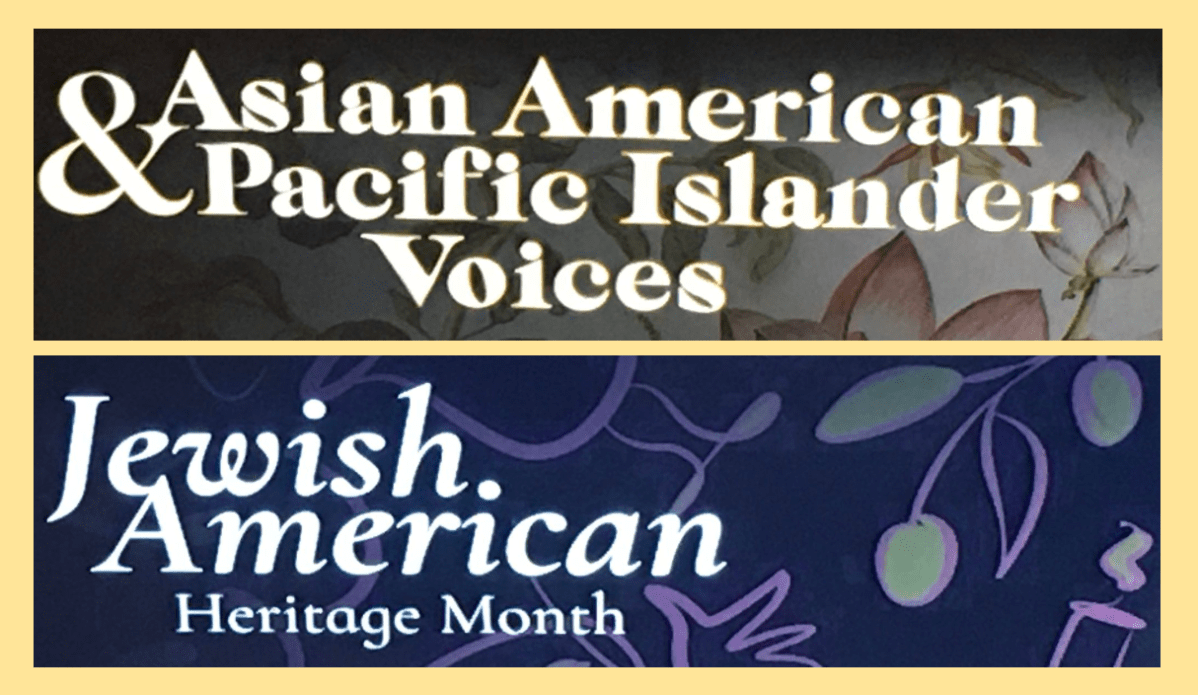
May 1 to 31 marks both Asian American, Native Hawaiian, and Pacific Islander (AANHPI) Heritage Month and Jewish American Heritage Month. I only discovered this while scrolling on a streaming platform and seeing their specially marked collections of shows and movies.

I was surprised, but upon reflection, it made total sense. When there are only 12 months in a year, and a few more than 12 immigrant groups, diasporas, and other communities that deserve recognition, there’s bound to be some overlap.
AANHPI Heritage Month was originally just Asian/Pacific Islander Heritage Week, starting in May 1979, and was expanded to the rest of the month more than a decade later. There were already two major Asian American milestones associated with May: the arrival of the first Japanese immigrants in 1843, and the 1869 completion of the transcontinental railroad, which was built predominantly by Chinese laborers.

Jewish American Heritage Month was established in 2006, two years after the 350th anniversary of “American Jewish history.” This presumably refers to the 1654 arrival of Jacob Barsimon, the first documented Jewish immigrant to settle permanently in the future United States. The choice of May wasn’t based on any specific historic date, but rather the resounding success of the anniversary celebration in 2004.
Though I can only speak as a Discount JewTM, I’m more than happy to share the month. (Funnily enough, in the time since I wrote that stand-up routine, I’ve discovered I actually do have a little Sephardic ancestry on my mom’s side.) In fact, I think many AANHPI and Jewish media fit together excellently.
For example, if you feel like watching dramedies about characters traveling overseas to reconnect with their family roots, you’ve got The Farewell and A Real Pain. If you’re interested in graphic novels that cover dark chapters of history, you can read works like Maus and They Called Us Enemy.
Looking for deliberately offensive songs that serve as hilarious middle fingers to bigots? Check out the classic “Springtime for Hitler” number from The Producers, along with Jimmy Wong’s “Asians in the Library” video.
If you’re in the mood for animated aquatic adventures, pair Finding Nemo and Moana. (Finding Nemo isn’t a “Jewish movie” per se, but it is co-directed by Lee Unkrich and stars Albert Brooks.)
In some cases, you don’t even need two separate items. The Pitt—an acclaimed medical drama that actually lives up to its hype—features both a complex Jewish protagonist and a rich ensemble of AANHPI characters, including several of Filipino descent.
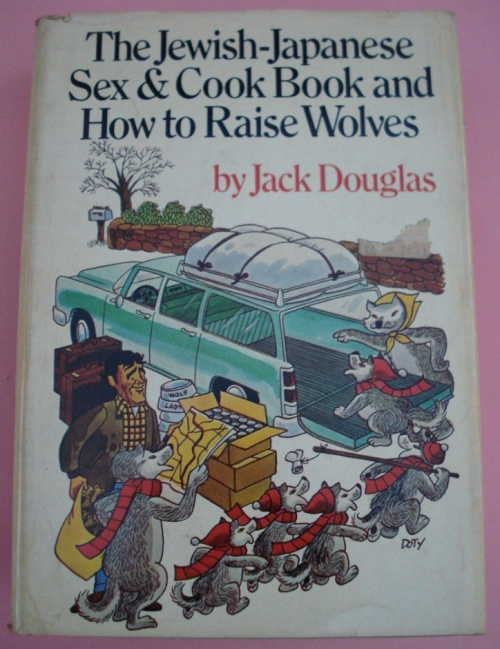
There also exists a vintage curiosity called The Jewish-Japanese Sex & Cook Book and How to Raise Wolves. I once found a copy in the collectibles section of a Half Price Books, and while it probably exceeded my college student budget, I kind of regret not buying it. The title may very well be the best part, though. (Based on reviews that aren’t low-effort or obvious jokes, it appears to be a humorous semi-autobiographical novel rather than the world’s most oddly specific instructional manual.)
Of course, we can and should continue to celebrate these communities long after the month designated for them. Come June, I’m sure corporations will immediately pivot to surface-level queer allyship, but that doesn’t mean consumers have to follow suit.
Much in the way the AANHPI and Jewish American umbrellas encompass multitudes of identities, the LGBTQ+ community is both its own culture and numerous different ones. So are the Black, Hispanic, Amerindian, Muslim, disabled, and other communities. When you examine how they intersect, the possible combinations are astronomical—which is how you end up with, say, a bisexual Jewxican on the autism spectrum.
Every day of every month is part of our collective heritage. And we all have so much to learn from each other.

 Media Shower